
These copper-wound Eaton units become interesting after one essential check: does 34.5 kV to 416Y/240 V fit your project?
Contents
| Check | Why it changes the purchase |
|---|---|
| 2,600 kVA; 34.5 kV → 416Y/240 V | Voltage fit comes before price or winding preference. |
| 60 Hz, three phase | Match the intended electrical system. |
| Copper windings; FR3 fluid | Identify the construction and fluid-management requirements. |
| 13 unused units / 2 damaged units | Separate installation candidates from repair projects. |
| Serial-specific scope | Match photos, tag, accessories, inspection and test records. |
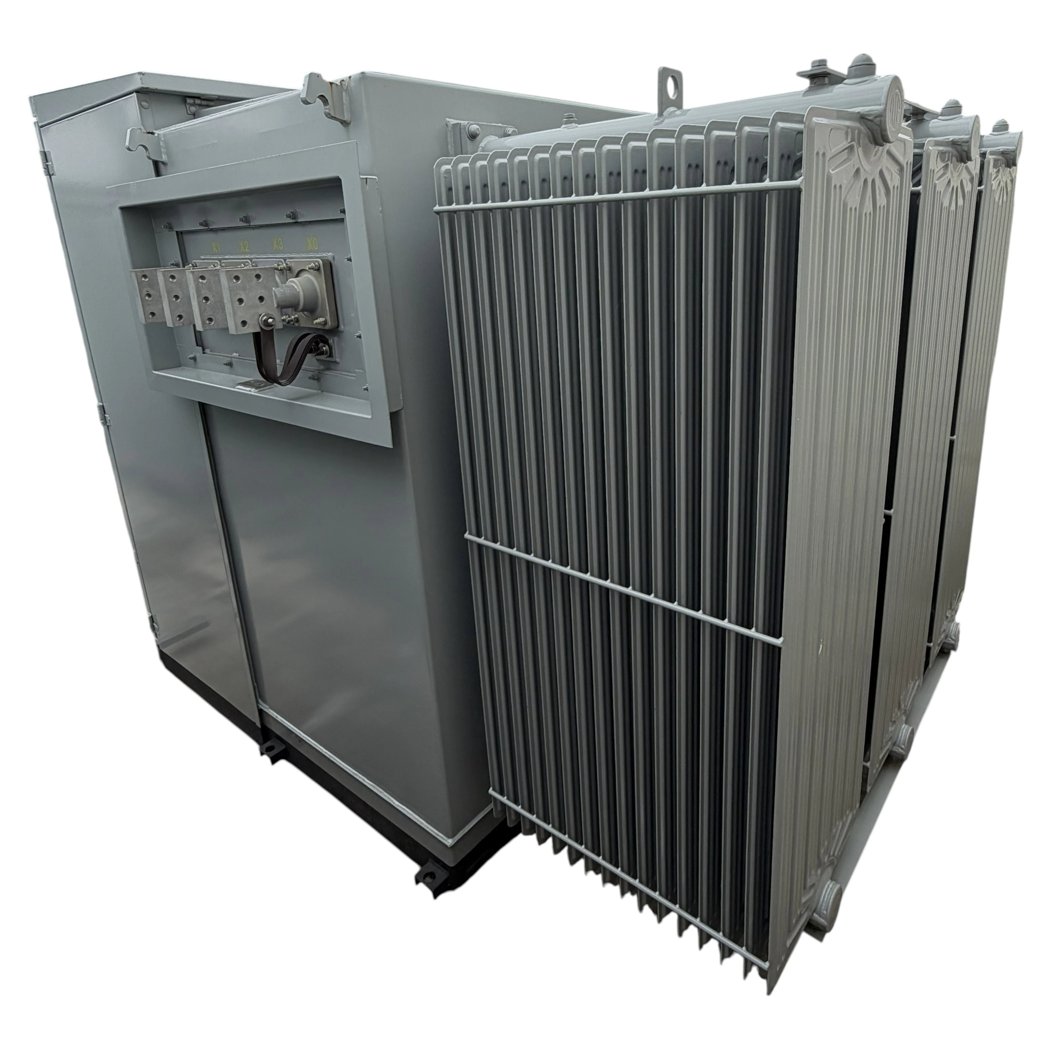
416 volts is the first buying decision
The listed secondary is 416Y/240 V. It is not 480Y/277 V. A 416 V line-to-line system provides approximately 240 V line-to-neutral; a 480 V system provides approximately 277 V. Those are different equipment interfaces.
At 2,600 kVA, three-phase full-load current is approximately 2,600,000 ÷ (√3 × 416) = 3,608 A. At 480 V it would be about 3,127 A. The lower voltage requires about 15% more current for the same kVA. That matters to the bus, breakers, conductors and downstream distribution design.
Unused and damaged are different commercial offers
The 13-unit unused package and the two-unit damaged package are deliberately separated. “Unused” describes reported service history; it does not replace an inspection after storage and transport. A repair unit needs a repair scope, cost, schedule and post-repair testing before it can be compared with an installation candidate.
For a package, ask which serials are included and whether quantities can be split. Selecting a package and its serial-numbered listings does not increase the available unit count.
The test package makes the copper premium easier to value
Obtain factory loss and impedance data if available, then agree the electrical and fluid tests needed before energization. Condition, winding ratio, insulation system, fluid condition and accessory operation each answer a different question. Test selection belongs with the responsible transformer specialist and the installation requirements.
Then compare total delivered and installed cost against alternatives with the same electrical scope. Copper can offer compact winding geometry and meaningful residual metal value. Neither benefit rescues a transformer with the wrong voltage or an unpriced repair.
Make the offer specific
Send quantity, utility voltage, required secondary voltage, site location and energization date. We can then discuss the appropriate serials, records, inspection access and transport scope. That is faster than quoting a kVA number and discovering the voltage mismatch later.